


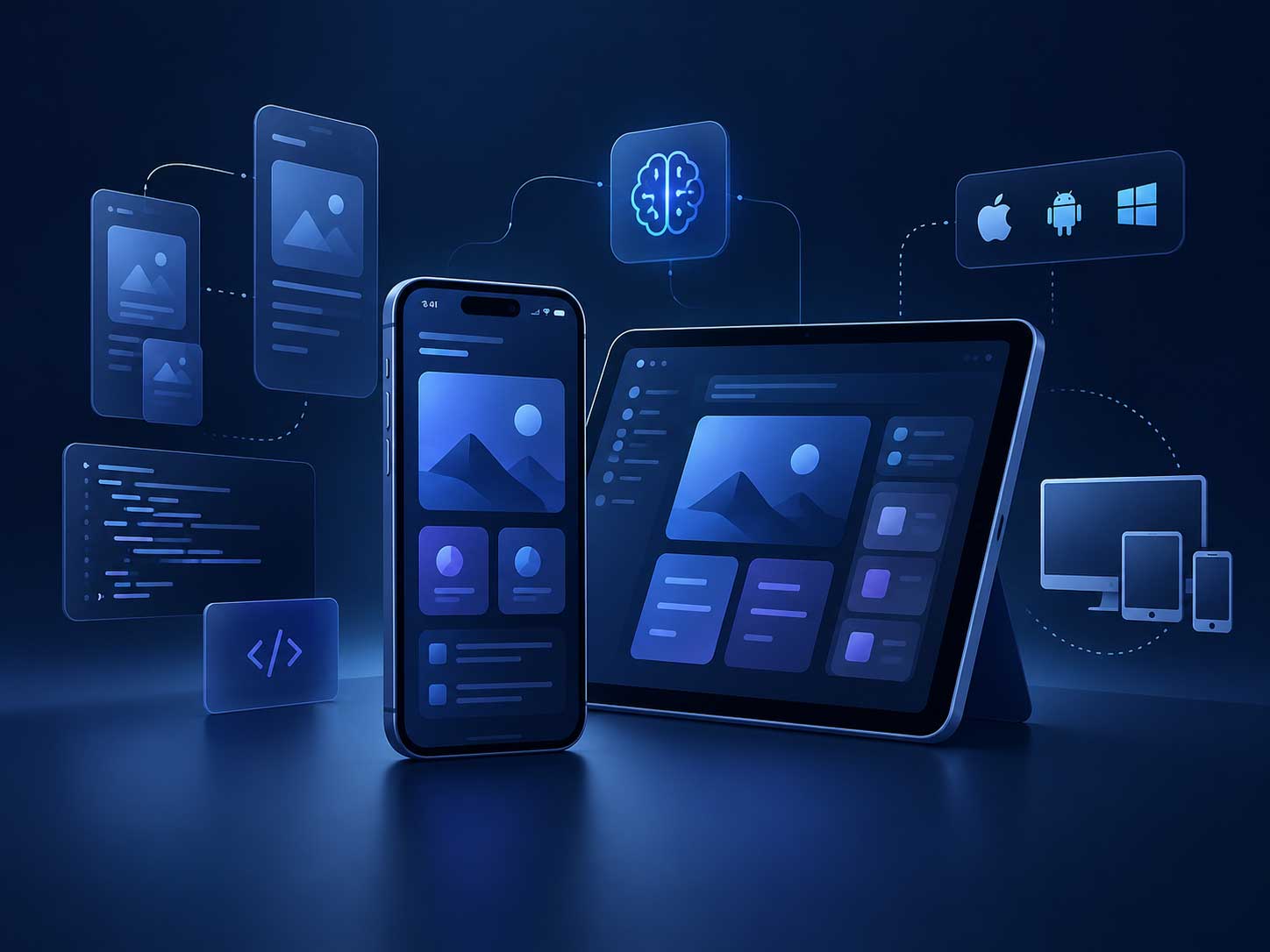
App development is moving beyond the smartphone screen as AI, adaptive interfaces, privacy and multi-device experiences reshape how modern products are designed and built.
App development in 2026 is being shaped by a simple reality: users no longer stay on one device, one screen size or one interaction model. Phones remain central, but foldables, tablets, laptops, cars, wearables and immersive devices are now part of the same ecosystem. Google’s Android guidance has moved strongly toward adaptive development, while Apple continues to expand native frameworks for on-device intelligence and system-level integration.
That changes the job of an app team. Developers are not only shipping features for a fixed screen. They are designing experiences that need to remain fast, useful and consistent across different contexts. The strongest products are being built around flexible architecture, responsive layouts, secure data flows and services that can evolve without forcing teams to rebuild everything from scratch.
Artificial intelligence is moving deeper into the application layer. Apple now provides developers with direct access to on-device foundation models and new frameworks for running custom AI models locally, while cloud-based models remain useful for heavier tasks. This hybrid approach gives teams more choice over speed, privacy, cost and reliability.
The important shift is that AI is becoming a product capability rather than a separate feature. Search can understand intent, support tools can summarize context, creative apps can generate content and productivity software can act on natural-language instructions. But good implementation still requires testing, clear limits and graceful fallback when a model produces the wrong result.
Android is pushing toward an adaptive-first standard as users move between phones, foldables, tablets, desktop environments, vehicles and XR devices. Layouts now need to respond to available space instead of assuming a single portrait screen.
That means navigation, content density and input methods must adapt as well. A design that feels excellent on a phone can become awkward on a large display if it simply stretches. Developers need components that reorganize intelligently and preserve context as users resize windows or switch devices.
New capabilities do not remove old expectations. Users still notice slow launches, battery drain, crashes and unnecessary permissions. Apple continues to require developers to disclose data practices, while both major mobile platforms are tightening technical standards around modern navigation, system behavior and user control.
On-device processing can help by keeping some sensitive information away from remote servers while reducing latency. At the same time, teams need to decide carefully what should happen locally and what belongs in the cloud. The best answer depends on the feature, the data and the device.
The most successful apps will not be defined by a single framework or trend. They will be built to adapt: to new devices, new AI capabilities, new privacy expectations and new ways of interacting.
App development is becoming less about shipping one finished product and more about maintaining a living system. Teams that design for change from the beginning will move faster later, because they can add intelligence, support new screens and improve performance without breaking the experience users already trust.