


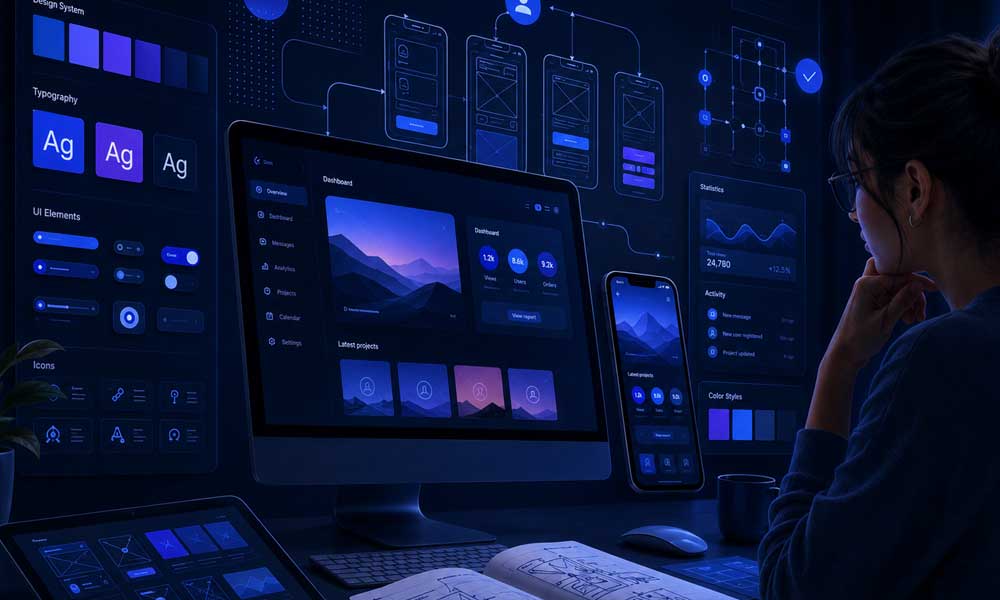
Modern UI/UX design is shifting toward clearer journeys, smarter personalization, accessibility and human-centered interfaces that reduce friction.
UI/UX design is no longer judged only by how polished an interface looks. A beautiful screen can still fail if users do not understand what to do next, cannot find key information or feel lost after the first click. Today, the strongest digital products are designed around clarity, speed and trust.
The current direction in UI/UX is practical. Teams are using research, data and AI-assisted tools to understand user intent earlier and test ideas faster. But good design still depends on human judgment. A product should not simply impress people for five seconds. It should help them complete a task with less stress.
AI is becoming useful in the early stages of UI/UX design. It can help generate layout options, organize content, summarize user feedback and create prototypes. This gives designers more space to explore different directions before choosing the best one.
Still, AI should not replace strategy. It can suggest patterns, but it does not fully understand business goals, brand tone or emotional context. The designer’s job is to decide what feels natural, what feels confusing and what actually supports the user.
Accessibility is no longer an optional detail added at the end of a project. Strong contrast, readable typography, keyboard navigation, clear forms and support for screen readers are becoming part of responsible digital design.
This is not only about compliance. Accessible interfaces are usually better for everyone. When a product is easier to read, easier to navigate and easier to understand, it performs better across devices, ages and situations.
Another important trend is the move toward cleaner, more intentional interfaces. Users are tired of overloaded pages, dark patterns and endless pop-ups. They want simple decisions, honest information and smooth flows.
The future of UI/UX will belong to products that feel helpful, not manipulative. Great design will combine visual quality with usability, accessibility and emotional intelligence. The best interface is not the loudest one. It is the one people can use without thinking too hard.